kiruthika
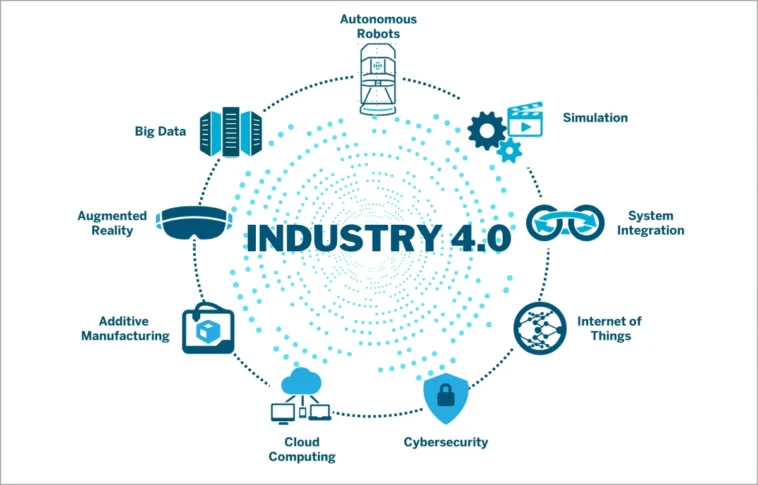
A smart factory is a manufacturing facility that uses connected sensors, real time data, artificial intelligence, and automation to monitor and adjust production without waiting for a human to notice a problem. It is the practical, on the floor version of Industry 4.0: machines, systems, and people share live data so decisions get made in seconds instead of at the next shift meeting. If your equipment can tell you it is about to fail before it actually does, you already have one foot in a smart factory.
What is a smart factory, exactly?
A smart factory connects machines, sensors, software, and people into one continuous feedback loop. Instead of a machine simply running until it breaks or a report showing yesterday’s output, sensors stream condition and performance data constantly. Software analyzes that stream, flags anomalies, and in more mature setups, adjusts the process automatically. The goal is not “more automation” for its own sake. It is faster, better informed decisions at every level of the plant, from a single machine to the entire supply chain.
What is Industry 4.0, and how does it relate?
Industry 4.0, sometimes called the Fourth Industrial Revolution, is the broader shift that makes smart factories possible. Where the first three industrial revolutions were about steam power, mass electrification, and early computing, Industry 4.0 is about connecting physical equipment to digital systems through the Industrial Internet of Things (IIoT), cloud computing, AI, and cyber-physical systems. Think of Industry 4.0 as the movement and the smart factory as the building where you can actually see it working.
A 2026 systematic academic review of smart factory production frames it as the integration of cyber-physical systems, IoT, and data-driven decision making into a single connected production environment, and notes that the field is now moving toward Industry 5.0, which adds a stronger focus on human-machine collaboration and sustainability on top of the automation gains Industry 4.0 delivered.
What technology powers smart manufacturing?
Most smart factories are built from a similar stack of technologies, layered on top of existing equipment rather than replacing it wholesale:
• IIoT sensors attached to machines, tanks, or materials that capture temperature, vibration, pressure, moisture, and throughput.
• Edge computing that processes data close to the machine so decisions do not wait on a round trip to the cloud.
• Digital twins, virtual replicas of a line or an entire plant, used to simulate changes before they are made on the real floor.
• AI and machine learning models that spot patterns in historical and live data to predict failures or quality issues.
• Industrial robots and cobots that handle repetitive or precision tasks alongside human operators.
• Cloud and MES/ERP integration that ties shop floor data to scheduling, inventory, and business systems.
A 2026 paper in the Journal of Al-Qadisiyah for Computer Science and Mathematics describes a practical version of this stack: a retrofitted plastic manufacturing facility where IoT sensors and a smart gateway were added to existing dehumidifying dryers to continuously track raw material moisture, catching abnormal conditions in real time rather than after a batch of parts had already failed inspection. That is a useful reminder that a smart factory does not require replacing your machines. It usually means instrumenting the ones you already have.
Why does real time data matter so much?
Real time data is the actual engine behind every smart factory benefit you hear about. A monthly maintenance report tells you a motor is wearing out after it has already cost you a shift. A live vibration sensor feeding an AI model can flag the same issue days or weeks in advance, while the line is still running. Industry researchers covering 2026 trends describe this as the shift from reactive to predictive operations: manufacturers feeding real time and historical sensor data into machine learning models to detect anomalies, forecast failures, and optimize processes with a precision that periodic manual checks could never match.
What “real time” actually means on a factory floor, in concrete terms:
• Sensor polling: IoT sensors typically transmit operational readings every 1 to 10 seconds depending on how critical the equipment is, covering temperature, vibration, pressure, current draw, and acoustic signatures.
• Edge processing: handling that data close to the machine, rather than sending everything to the cloud first, can cut data latency by up to 90%, which matters when a decision needs to happen before the next production cycle, not after it.
• Analysis at scale: AI-driven monitoring systems can analyze roughly 10,000 data points per second across a fleet of machines, something no manual inspection schedule could ever match.
• Live dashboards: fleet-wide health scores with simple traffic-light indicators let a single operator watch dozens of assets at once instead of walking the floor with a clipboard.
The payoff shows up directly in the numbers. Manufacturing plants lose an average of roughly $253 million a year to unplanned equipment failures, and a single hour of unexpected downtime can cost around $125,000 to $260,000 in lost production, emergency repairs, and quality fallout. Real time monitoring is what closes that gap:
• The U.S. Department of Energy has found that predictive maintenance programs built on real time condition data reduce equipment breakdowns by 70 to 75%.
• Facilities running AI-driven, real time predictive maintenance typically report a 30 to 50% reduction in unplanned downtime and a 20 to 40% extension in equipment useful life.
• Maintenance costs typically drop 25 to 40% once teams act on live sensor alerts instead of fixed maintenance calendars.
• Real time energy monitoring can reduce a facility’s overall energy consumption by up to 10% through continuously optimized operation.
• Despite this, around two-thirds of manufacturers still rely mainly on reactive maintenance, which is exactly the gap real time data adoption is closing heading into 2027.
In practice, real time data is what turns three of the biggest manufacturing cost centers into levers you can actually pull:
• Downtime, caught and prevented before it happens, instead of measured after the fact.
• Quality, corrected mid-process instead of discovered at final inspection.
• Energy and material use, adjusted continuously instead of estimated once a quarter.
What do smart factory examples look like in practice?
Smart manufacturing technology shows up differently depending on the industry, but a few patterns repeat:
• Predictive maintenance: sensors on rotating equipment flag bearing wear or overheating before a breakdown, scheduling repairs during planned downtime instead of an emergency stop.
• Automated quality inspection: AI-powered cameras check every unit at line speed instead of a sampled batch, catching defects that human inspectors miss at scale.
• Digital twins for changeovers: a plant simulates a new product run virtually first, cutting the trial and error that used to happen on the real line.
• Connected supply chains: real time inventory and machine data feed directly into planning systems, so a slowdown on one line automatically adjusts downstream schedules.
• Energy optimization: live consumption data lets a plant shift energy-intensive processes to off-peak windows automatically.
What do the 2026 numbers actually show?
The data backs up why manufacturers are moving fast on this, not slowly:
• The global Industry 4.0 market is projected to grow from roughly $202.8 billion in 2025 to $238.9 billion in 2026, a compound annual growth rate near 17.8%, and it is expected to reach close to $459.7 billion by 2030, according to a 2026 market report from Research and Markets. The report ties this growth directly to demand for real time decision making and digital twin integration.
• The global smart factory market specifically was valued at roughly $88.8 billion in 2025 and is projected to reach about $157.8 billion by 2030, with industrial robots identified as a key growth driver, per a 2026 report from The Business Research Company.
• Deloitte’s 2025 Smart Manufacturing Survey, cited in 2026 industry coverage, found that 92% of manufacturers view smart manufacturing as the primary driver of their competitiveness over the next three years.
• On the risk side, Fortinet’s OT security research found manufacturing was the most targeted sector for cyberattacks, representing 17% of targeted incidents, a reminder that connecting the shop floor also means securing it.
• Asia-Pacific is repeatedly identified as the largest and fastest growing region for smart factory adoption in 2026 market analysis, driven heavily by automotive and electronics manufacturing.
Traditional factory vs. smart factory
| Aspect | Traditional factory | Smart factory |
| Maintenance | Scheduled or reactive, after failure | Predictive, based on live condition data |
| Quality control | Sampled inspection, after the fact | Continuous, in-line inspection |
| Decision speed | Daily or weekly reports | Seconds to minutes, via live dashboards |
| Data flow | Siloed between machines, shifts, and systems | Connected across floor, MES/ERP, and supply chain |
| Adaptability | Manual reconfiguration for new products | Digital twin simulation before physical changeover |
How can a manufacturer get started?
You do not need to rebuild a plant to begin. Most successful rollouts follow a similar path:
1. Pick one high-value line or bottleneck, not the entire facility, for a first pilot.
2. Instrument the equipment you already have with retrofit IoT sensors rather than buying new machines.
3. Get the data into one place where it can actually be watched in real time, not scattered across separate systems.
4. Start with predictive maintenance or quality alerts, since these show measurable ROI the fastest.
5. Expand connectivity to MES and ERP once the pilot proves out, so shop floor data informs planning decisions too.
6. Build in OT security from day one, since a connected line is also an exposed one.
FAQs
A smart factory is a manufacturing facility where machines, sensors, and software share real time data so problems get caught and decisions get made immediately, instead of being discovered in a report days later.
Not exactly. Industry 4.0 is the broader technology movement, built on connectivity, IoT, and AI. A smart factory is what that movement looks like when it is actually implemented on a specific production floor.
IIoT sensors paired with predictive maintenance software are usually the first technology manufacturers adopt, since they deliver measurable downtime reduction quickly and can be retrofitted onto existing equipment.
Costs vary widely by scope. Retrofitting a single line with sensors and a monitoring dashboard is far cheaper than a full facility overhaul, which is why most manufacturers start with one pilot line rather than converting an entire plant at once.
No. Falling costs for sensors, edge computing, and AI tools, combined with open interoperability standards like MTConnect, have made smart manufacturing increasingly accessible to small and mid-sized manufacturers, not just large enterprises.